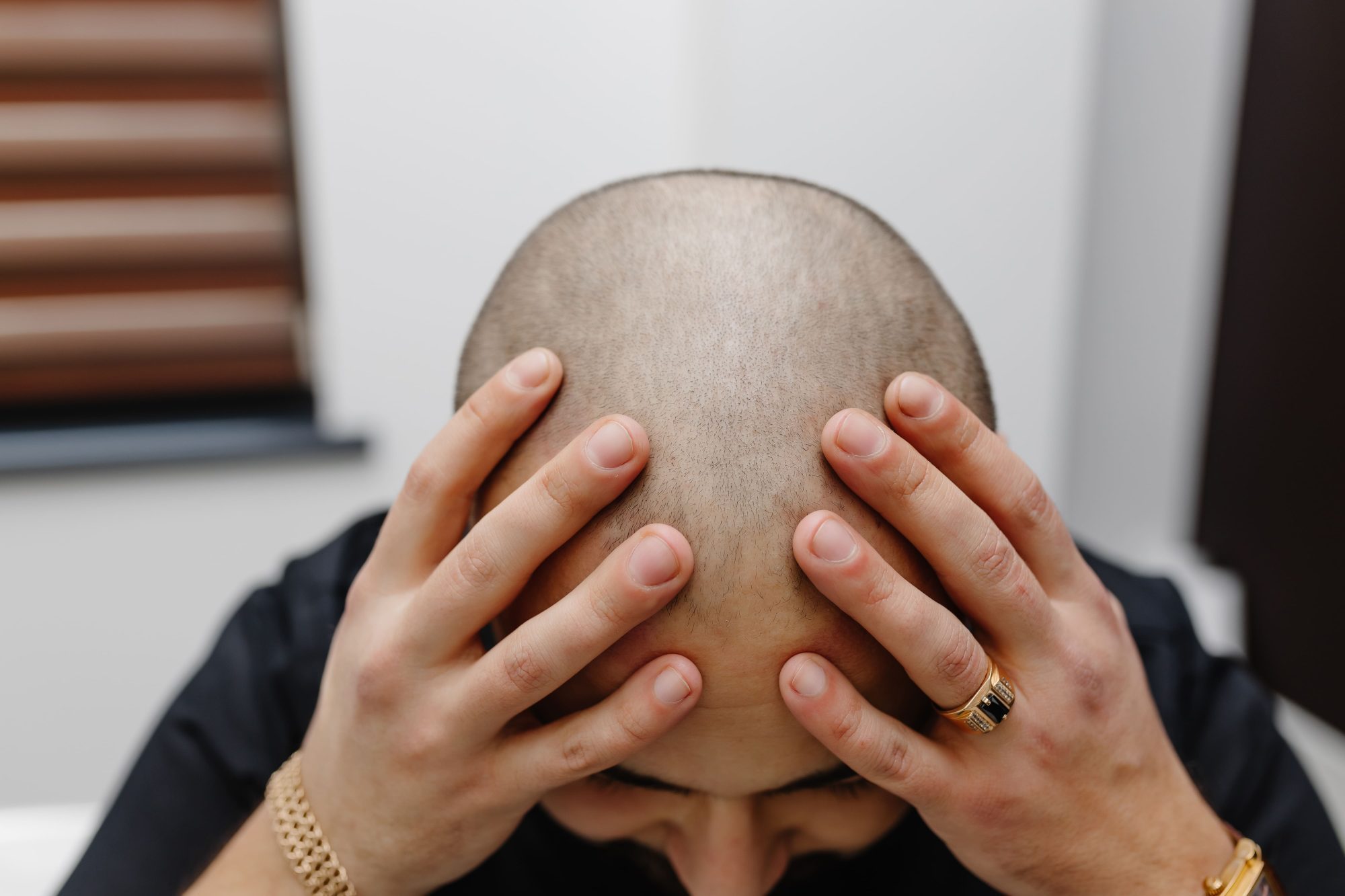
(AGA) is a condition in which the hair thins, thins and becomes less pigmented in certain areas.
1. Why is alopecia called "androgenetic"
"Andro-" is short for androgens (male steroid hormones), indicating the cause of hair loss - the negative effect of these hormones on the hair follicle, the blood vessels that feed it, and the skin itself.
"Genetic" - because it has the ability to be inherited from relatives.
2. Why does hair fall out in certain areas?
Hair follicles - in different parts of the scalp have different "vulnerability" to DHT. On the back of the head, the follicles have fewer DHT receptors, so they are protected from AHA there.
In men with manifestations of AGA: the hair growth line slowly recedes and "baldness" is formed in the area of the frontal corners, the parietal zone (top of the head) begins to "glow".
Women with AGA: notice the first changes in the parting area.
2. Does hair fall out intensively with AGA?
-No. This process is slow. DHT (dihydrotestosterone - a highly active male steroid hormone) - slows down hair growth processes and each new hair that grows from a DHT-sensitive follicle gradually becomes thinner and weaker. And as a result: once thick hair turns into fluff.
3. Is it necessary to be examined for hyperandrogenism (excess male hormones) with AGA?
Quite rare. With AGA, the male hormone DHT, in most cases, does not exceed the "normal" range in blood serum. The problem arises due to increased sensitivity of hair to DHA. An indication for taking the test is the presence of other symptoms of hyperandrogenism, in addition to AGA.
4. Is it possible to return hair that has fallen out?
For the answer, you need to see your "trichological picture"!
1. Hair loss does not mean "death" of the hair follicle with this diagnosis. Hair loss is one of the stages of the "life cycle" of hair.
2. With AGA, before the hair follicle dies, the hair will begin to thin/thin... I hope you will reach us at this stage.
3. Today, there are still no methods that would "revive" a hair follicle that has already died.
4. How is AGA treated? When the hair begins to grow thinner - we prescribe drugs and methods that increase the processes of blood circulation in the follicle and the nutrition of dividing cells (blockers of DHT formation, stimulating serums, PRP, exosomes)
5. If the hair follicle has "died"?
If the hair has thinned significantly in a certain area and medical therapy does not give the desired result, the therapy of choice is: transplantation of hair follicles.
The purpose of the procedure: to transplant DHT-insensitive hair follicles from the occipital zone to the thinning zone.