
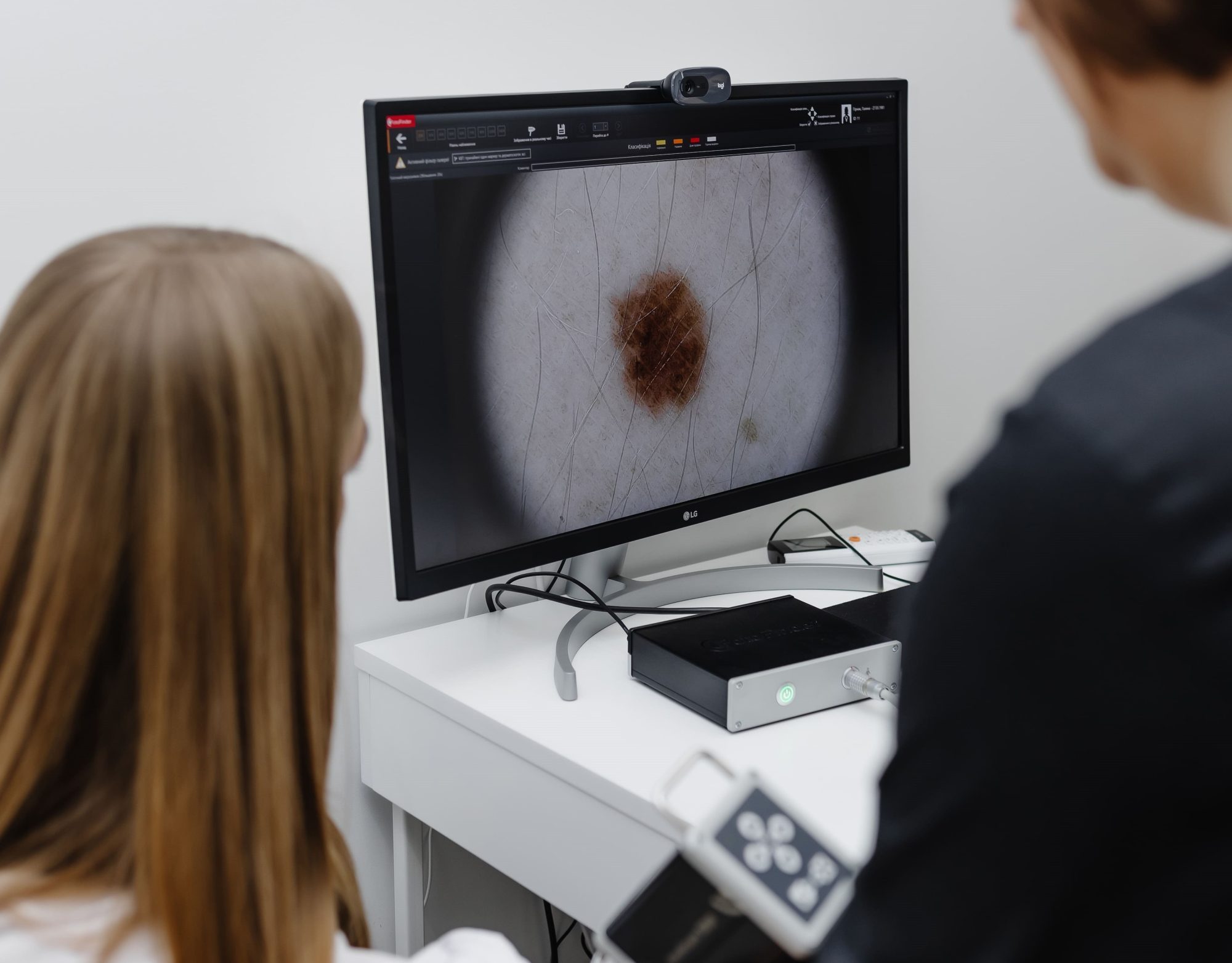
Melanoma is a malignant skin tumor that arises from pigment-producing cells called melanocytes, which are located in the epidermis (the outermost layer of the skin). Melanocytes determine the color of the skin and are responsible for protection against ultraviolet radiation.
Melanomas primarily occur on the skin, but they can also develop on the mucous membranes of the oral cavity, genitals, rectal area, conjunctiva, brain membranes, and nail bed.
Melanomas can vary in size, shape, color, and their tendency for invasive growth and metastasis.
Risk factors for melanoma include sun exposure, particularly sunburns, a personal or family history of melanoma, light skin, freckles, and a large number of moles.
If melanoma develops in the superficial layers of the skin and has not penetrated through the basal membrane, it can be easily removed, and the survival rate is about 85-90%. However, if it has invaded deeper layers, the mortality rate ranges from 65% to 80%.
Frequently Asked Questions about moles that are commonly heard during consultations are as follows:
-
"Will a mole transform into melanoma?"
About 70% of melanomas occur on healthy skin and do not transform from existing moles.
-
"Is it dangerous to remove a mole? Will it cause cancer?"
Previously, this myth was associated with the removal of an undiagnosed melanoma or incomplete removal. On the contrary, proper removal is recommended for melanoma risk.
-
"Should I wait until autumn?"
Moles and melanomas are removed based on indications, and there is no specific seasonality. If you want to remove a new growth, it can be done at any time. The myth is associated with sun exposure and the possibility of hyperpigmentation.
-
"If a mole is large and protrudes above the skin, is it dangerous? If it is small and doesn't bother, is it not dangerous?"
Melanoma can be as small as a pinhead or a mere dot on the skin. Only a specialist can determine how dangerous a mole is.
-
"Is laser the best method?"
No, the method of removal is chosen depending on the nature of the lesion. For melanoma and suspicious moles, surgical methods are preferred.
-
"Is histology unnecessary?"
Histopathological examination is always necessary because any dermoscopy is a subjective method. We observe with our eyes, but the final diagnosis is made only after histological confirmation.
-
"If I injure a mole, will it transform into melanoma?"
No, it has been proven that trauma to a mole is not a triggering mechanism for melanoma.
-
"Is melanoma always black?"
No, melanoma can be deceptive and can have any color, including non-pigmented lesions.
-
"Can moles be burned off with medications, caustics, or acids?"
Moles should not be removed with such preparations because it becomes impossible to identify any malignancy and send it for histological examination. If a malignant tumor is mistakenly cauterized, the disease may spread, and the patient could die.
-
"If a mole is large and protrudes above the skin, is it dangerous? If it is small and doesn't bother, is it not dangerous?"
Melanoma can appear as a small dot on the skin. Only a specialist can determine how dangerous a mole is.
Conclusion:
Your health is in your hands, so it is recommended to:
- Undergo a dermatologist examination with dermoscopy in Ivano-Frankivsk at least once a year.
- Protect yourself from the sun by using sunscreen, sprays, and physical protection such as hats and shirts.
- If you notice the appearance of new skin growths, promptly seek medical attention of the dermatologist
